Pedestrians and Buses First? Have Your Say on the Future of This Key Bondi Beach Hub

People walking, cycling, and pushing prams through Bondi Beach will soon receive unprecedented right-of-way protection as local planners move to eliminate a notoriously dangerous six-way traffic bottleneck.


A Fresh Approach to a Familiar Hub

Bondi Beach
Photo Credit: Waverley Council

The sprawling junction where Hall Street, O’Brien Street, and Glenayr Avenue meet serves as a vital community heartland for local services and daily beachside life. While the intersection has been included in multiple identity studies over the past two decades—including the Six Ways project in 2007, a street upgrade in 2021, and the Destination Hall Street campaign in 2022—local leaders are now looking at the space through a modern transport lens. 

Following an extensive local area traffic management study conducted by consulting firm GHD in November 2022, data regarding local crash histories, near-miss incidents, speed profiles, and vehicle volumes convinced planners that a complete structural realignment was necessary to protect the public and revitalise the communal space.

Weighing the Community Options

Bondi Beach
Photo Credit: Waverley Council

To jumpstart this transformation, council planners recently completed fresh traffic modelling based on real-world weekday peak-hour surveys collected in February 2025. Designers intentionally avoided using data from the absolute peak of the summer tourist rush to ensure the final infrastructure is not unnecessarily over-engineered for year-round residents. Two distinct concept designs are now sitting before the community for public feedback. 

The first option completely shifts the traditional right-of-way by giving continuous priority to buses and general traffic moving between O’Brien Street and Glenayr Avenue. While this adjustment will cause minor delays for private cars navigating Hall Street, the broader efficiency gains are expected to slash overall average wait times across the entire intersection by 50 per cent. Conversely, the second option maintains the current traffic rules, meaning commuters on Glenayr Avenue will continue to face the same significant, daily delays they experience today.

Shifting the Transport Hierarchy

Bondi Beach
Photo Credit: Waverley Council

Both proposals represent a strict commitment to the council’s 2017 environmental and transit policies, which deliberately place active travel and public buses at the top of the local transport hierarchy. This framework explains why a traditional roundabout was completely ruled out during the early design phases, as planners determined that roundabouts create steep safety challenges for people walking, cycling, or rolling through the unique six-way layout. 

Instead, designers are exploring the introduction of in-lane bus stops. Although waiting behind a stopped bus will cause brief, minor delays for drivers—comparable to waiting for a neighbour to parallel park—the setup dramatically improves bus reliability. Additionally, keeping buses in the active traffic lane actually increases the available kerbside space for regular car parking, which local officials believe will relieve street parking pressures and encourage more residents to stop and support the nearby Hall Street commercial shops.


Shape the Final Design

Local council representatives emphasise that this project is still in its infancy, which is why official cost estimates have not yet been drawn up or submitted to local representatives. Project coordinators are actively refuting claims that local businesses and residents have been left out of the loop, noting that this current feedback phase is an extension of a consultation process that originally began back in 2022. Officials stress that all community survey responses, written opinions, and stakeholder insights will be thoroughly evaluated to help refine the blueprints before any final funding decisions or construction votes are made by local councillors.

Published Date 27-May-2026

Bondi Junction Growth Plan Signals Big Changes for Sydney’s East

Bondi Junction’s shopping strips and transport interchange may soon give way to a denser, more active town centre designed for apartment living, late-night dining and around-the-clock foot traffic.


Waverley Council is preparing to place its Bondi Junction master plan on public exhibition after months of planning work tied to Sydney’s housing shortage and the NSW Government’s push for more homes near train stations. The proposal outlines space for about 3,000 additional dwellings across Bondi Junction, alongside new public squares, wider pedestrian links and expanded retail and hospitality areas around Oxford Street Mall.

According to Waverley Council’s planning documents, the suburb’s role as a transport hub has long shaped the area, with commuters and visitors moving through the interchange daily on their way to Bondi Beach and Sydney’s eastern suburbs. The council’s latest vision instead centres on keeping people in the precinct longer by adding more homes, community facilities and entertainment spaces close to public transport.

Photo Credit: WaverleyCouncil

Taller Buildings Planned Around Bondi Junction Station

The draft plan divides Bondi Junction into several redevelopment zones, with the tallest buildings expected near the train and bus interchange and along sections of Oxford Street. Mid-rise apartment buildings are also proposed along Bondi Road and Bronte Road, while shop-top housing would expand across existing commercial strips.

A separate NSW Planning proposal for large build-to-rent towers on Oxford Street already signals the scale of projects being considered in the area. That development includes more than 1,000 apartments across towers rising above 40 storeys.

Council says concentrating housing near major transport links could reduce car reliance while supporting local businesses.

Photo Credit: NSW SSD-100907461

Oxford Street Mall Set for Extended Dining and Night Activity

Part of the proposal focuses on reshaping Oxford Street Mall into a busier public space with longer trading hours, outdoor dining and more live entertainment. Council wants Bondi Junction to function as more than a daytime shopping centre by encouraging activity later into the evening.

A separate Waverley Council statement outlined plans for expanded dining, cultural events and live music as part of a broader effort to support local businesses and increase foot traffic after business hours.

The master plan also includes targets for additional tree canopy, upgraded public spaces and more community facilities spread across the precinct.

Photo Credit: WaverleyCouncil

Housing Pressure Continues Across Sydney’s Eastern Suburbs

Bondi Junction’s redevelopment push comes as the NSW Government expands its transport-oriented housing strategy across Sydney. Under the state’s Transport Oriented Development Program, higher-density housing is being encouraged within walking distance of train stations and major public transport corridors.

Neighbouring suburbs including Woollahra and Edgecliff are also facing major planning changes linked to increased housing targets. Some residents and community groups have raised concerns about traffic congestion, overshadowing and pressure on local infrastructure as density increases.

At the same time, housing advocates argue suburbs with established transport systems and commercial centres are among the few areas capable of supporting large numbers of new homes close to jobs and services. Sydney YIMBY described Bondi Junction as one of Sydney’s strongest locations for transit-focused housing growth because of its rail connections and existing retail core.

Affordable Housing Remains a Key Question

Waverley Council says 10 per cent of future homes delivered under the plan would be allocated as affordable housing, though further details around developer contributions and delivery methods are still expected during later planning stages.

The documents also point to future investment in public spaces, upgraded streets and community infrastructure tied to redevelopment contributions from developers.

The proposal has prompted discussion among residents about how Bondi Junction could manage future growth while maintaining local amenity and accessibility.


Published 20-May-2026

Bondi Beach Shared Bike Parking Set To Become Permanent

Bondi Beach’s shared bike parking bays are set to stay after a six-month trial gave riders clearer places to park and helped reduce the impact of dockless bikes on busy footpaths.


Bondi Beach Shared Bike Bays Move Beyond Trial Stage

At Bondi Beach, shared bikes are part of the constant movement of residents and visitors travelling through the area. Their convenience has made them popular for short trips, but their dockless design has also created a familiar problem: bikes left where people need to walk.

A six-month trial of designated shared bike parking is now set to become permanent after helping create clearer parking expectations in busy public areas.

Bondi Beach was included in the parking program, which introduced marked bays for shared bikes across key Waverley locations. Across the trial area, 60 dedicated parking locations were installed, with capacity for about 500 bikes.

The trial used a mix of on-street and off-street spaces, depending on the available room and the impact each location could have on pedestrians, traffic movement and parking.

shared bikes
Photo Credit: WaverleyCouncil

Bondi Beach Parking Responds to Dockless Bike Use

Shared bikes are hired for short-term use through mobile apps. In Sydney, they usually operate without fixed docking stations, allowing riders to finish trips without returning bikes to a specific location.

That system makes the bikes flexible, but it also means they can be left in places that affect footpath access. In a busy beach precinct such as Bondi Beach, poorly parked bikes can quickly add to pressure on public space.

The designated parking bays are intended to make the system more orderly. In Restricted Parking Zones, riders are required to park in marked bays. Operators support this through app prompts and penalties when bikes are left outside the required areas.

Penalties may include additional charges, fines or account suspension for repeat offences.

bike parking
Photo Credit: WaverleyCouncil

Marked Bays Create Clearer Parking Expectations

The Bondi Beach shared bike parking approach is part of a wider effort to manage a transport option that has grown quickly.

About one million shared bike trips were recorded across Waverley in 2025, showing the scale of use by residents and visitors. The current operators listed for the area are Lime, HelloRide and Ario.

The trial’s on-street bays use kerbside space and are often installed in existing No Stopping zones to reduce the effect on car parking. In some locations, car parking has been reallocated, with one car space able to hold about 10 to 15 shared bikes.

Off-street bays are used where footpath width allows, or where placing bikes on the street would have too much impact on traffic movement or parking. These areas are marked with line marking.

Bondi Beach shared bike parking
Photo Credit: WaverleyCouncil

More Bays Proposed After Positive Feedback

Feedback on the six-month trial was described as overwhelmingly positive. It also showed support for further expansion and stronger parking management.

A further 36 shared bike parking areas are proposed across the wider area, with capacity for about 400 more bikes. Public feedback on the trial ran from Monday, 2 February 2026 to Monday, 2 March 2026.

The permanent move is a practical response to a visible local issue. It keeps shared bikes available as a short-trip option while setting clearer boundaries around where they should be left.


The shift does not remove shared bikes from the area. It changes how they are managed, with designated spaces becoming the expected place for riders to end their trips.

Published 6-May-2026

Ever Walked Bondi to Manly? Now You Can Run it

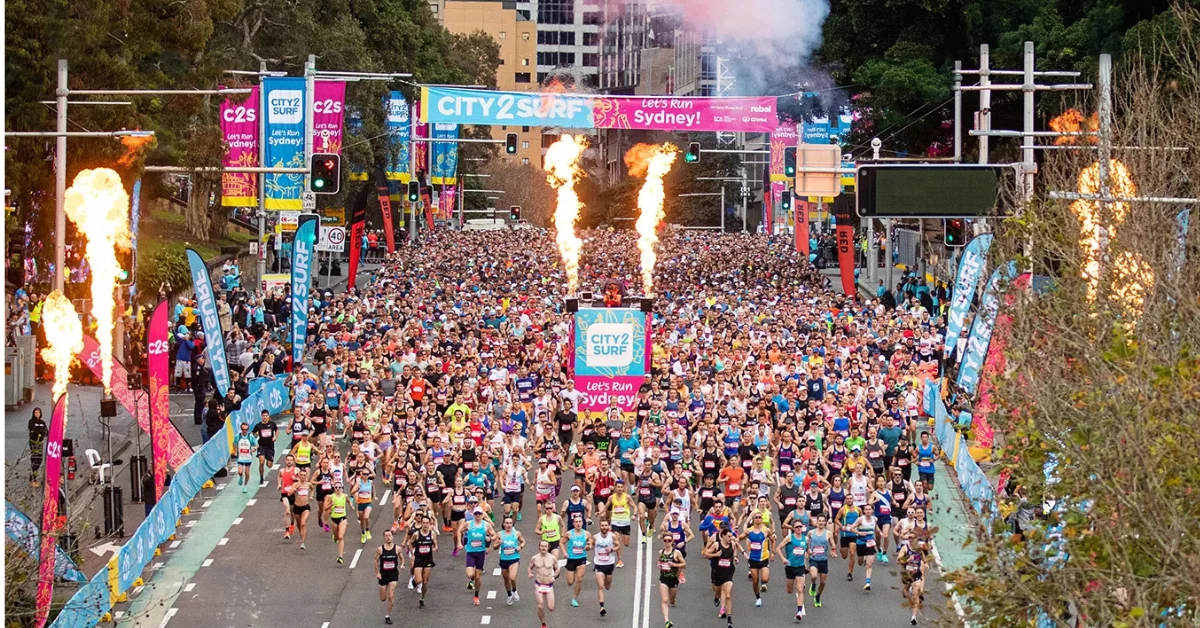
The Bondi to Manly Ultra Marathon returns this year, starting at Bondi Pavilion and finishing at Manly Beach, with registrations now open for the 80-kilometre solo ultra as well as two-person and four-person relay options that put the course within reach of runners who are not quite ready to tackle the whole thing alone.


For anyone who has walked the Bondi to Manly Walk and wondered what it would feel like to run it, that question now has a structured answer. The course follows the full 80-kilometre walking track, weaving south to north along clifftops, harbour foreshores, through national parks and past 49 beaches, the Opera House, the Harbour Bridge and some of the most photographed coastline on the planet.

The 2026 edition marks a new chapter for the race. Global events company MARI, which also manages the Nike Melbourne Marathon Festival and the Great Ocean Road Running Festival, has taken on the custodianship of the event, while the Bondi to Manly Walk Supporters Group remains the event’s owner and an advisory partner.

“The Bondi to Manly Ultra is a defining expression of Sydney’s identity and the enduring human spirit of athletic endeavour,” said Marcus Gale, managing director of MARI Australia.

Founding CEO Elle Pacholski said the partnership would take the event to new heights while staying true to the landscape and communities it passes through.

Three Ways to Run the Same Course

The solo category is the headline act: 80 kilometres from Bondi Pavilion to Manly Beach, run as a continuous effort, open to participants aged 18 and over. It is widely considered one of the Southern Hemisphere’s most demanding urban endurance races, drawing elite ultramarathon athletes and determined recreational runners from around Australia and internationally.

But the relay options are where the 2026 edition opens the door considerably wider. A two-person team splits the course into two legs of roughly 40 kilometres each, while a four-person team tackles legs ranging from 17km to 23km, making the event a perfect fit for runners used to the half-marathon distance.

The four-person relay is open to runners aged 16 and over, while the solo and two-person categories remain an 18-plus challenge. Every finisher receives a t-shirt, race number with timing device and finisher’s medal. Entries are limited and the event historically sells out.

A Race That Gives Back to the Track

The Bondi to Manly Ultra is a not-for-profit event. All proceeds are donated to the Bondi to Manly Walk Supporters Group and reinvested into preserving and enhancing the walking track that the course follows. Every entry is a direct contribution to the coastal environment runners pass through on race day.

The 2026 Bondi to Manly Ultra will commence on Saturday 24 October 2026. To register for the event, click here. Follow the event on Facebook for course and logistics updates in the lead-up to October.


Published 30-April-2026

More Bikes, Less Control? Bondi Braces for Changes to E-Bike Rules

Shared e-bike trips across the Bondi Beach area have surged more than 350 per cent in recent years, peaking at around 150,000 rides in a single month late in 2025, and a proposed new statewide framework could remove the hard cap that has kept the number of bikes on local footpaths in check.


About 1,600 shared e-bikes from three operators, Lime (green), HelloRide (blue) and Ario (white), currently circulate across the Waverley area. Under an existing agreement, that number is capped at 2,700. The draft Transport for NSW E-micromobility Sharing Schemes Reform, open for public submissions until 4 May 2026, would replace that hard cap with “dynamic fleet management,” allowing operators to scale numbers to demand rather than sitting under a fixed ceiling negotiated locally.

For residents walking through Bondi Beach and Bondi Junction, where around 60 designated e-bike parking areas already handle the heaviest demand in the area, the prospect of uncapped fleet growth on some of Sydney’s narrowest footpaths is the central concern.

A System That Is Already Stretched

The current framework requires improperly parked bikes to be relocated within two hours of being reported, under threat of seizure and fines. Operators enforce parking through in-app prompts and penalties for riders who ignore designated bays.

Shared e-bike
Photo Credit: WC

Restricted Parking Zones in high-pedestrian areas direct riders to specific bays, with GPS technology used to enforce compliance, though urban environments introduce a margin of error that operators are still working to reduce.

A successful trial has paved the way for the shared bike parking scheme to become permanent, with $20,000 allocated for 36 new spaces.

The proposed statewide framework would keep local management responsible for parking enforcement, no-go areas and operator compliance, but would reduce the fee flowing to local management to 20 cents from each 80-cent operator trip charge, with the remainder held at a statewide level for redistribution through grant programmes.

The Fee Argument at the Centre of the Debate

The operators who manage the day-to-day reality of abandoned bikes, complaints and compliance costs argue that the bulk of e-bike management work, and its cost, sits at the local level, not the statewide one. The existing agreement includes a requirement for operators to contribute to the cost of parking infrastructure, an arrangement that would be superseded by the new framework.

Photo Credit: Transport for NSW

Ausgrid’s head of electric charging Nick Black, commenting on the broader micromobility and EV infrastructure picture in NSW, noted that market-led approaches have consistently struggled to deliver infrastructure at the scale or coverage required.

The e-bike debate reflects the same tension: private operators can deliver where demand and economics support them, but the places that need the most management, precisely because they are most heavily used, are also the places where the cost of that management falls hardest on those least funded to carry it.

How to Report a Badly Parked Bike

For Bondi Beach residents who spot a shared e-bike blocking a footpath, access ramp or pedestrian crossing, the fastest resolution is to contact the relevant operator directly. Lime can be reached on 1800 861 305, HelloRide on 9423 0886 and Ario on 1800 882 746. Operators are required to respond and relocate within a set timeframe.

To have your say on the draft Transport for NSW e-micromobility framework before the 4 May 2026 deadline, click here or email e-micromobility@transport.nsw.gov.au.


Published 30-April-2026

How ‘Story Dogs’ Is Supporting Young Readers at Bondi Beach Primary School

At Bondi Primary School in Bondi Beach, a group of students are improving their reading skills in a setting shaped by patience and quiet encouragement, as part of the Story Dogs program, which pairs children with trained dogs to build confidence through one-on-one reading sessions.


A Bondi Beach Classroom With An Unlikely Listener

Inside the school’s library, students take turns sitting beside Tashi, a miniature poodle, reading aloud in short, individual sessions. Each child is given time to work through a book at their own pace, sounding out unfamiliar words without interruption.

The sessions are structured so that students rotate through one-on-one reading time, creating a calm and focused environment. Tashi remains beside each reader, offering a steady presence as the child progresses through the text.

Tashi is brought to the school by Sue Bognar, who volunteers as part of the program and supports students during the sessions.

Story Dogs And Its Approach To Reading

The Story Dogs program operates across Australia, placing trained dogs and volunteer handlers in schools to support children who may feel anxious reading aloud or who need additional encouragement.

Bondi Beach Story Dogs
Photo Credit: Story Dogs/Facebook

Children are selected by their schools, generally in the early primary years, and participate with parental consent. The program does not assess students directly, instead focusing on creating a positive and non-threatening environment around reading.

Handlers assist when needed, helping students work through difficult words, while the presence of the dog allows children to read without feeling judged. This approach encourages students to take their time and continue practising.

literacy program
Photo Credit: Story Dogs/Facebook

From A Regional Trial To National Reach

The program began in New South Wales in 2009, first trialled at a primary school in Murwillumbah. It was developed after its founders identified a need for alternative support for children who were falling behind in reading.

Since then, the initiative has expanded across the country, with hundreds of dogs and volunteers involved. Bondi Primary School in Bondi Beach is among the participating schools, with sessions held regularly as part of the program’s ongoing work.

volunteer program
Photo Credit: Story Dogs/Facebook

Building Confidence Through Consistent Practice

In Bondi Beach, the sessions are designed to give students a consistent opportunity to practise reading in a calm environment. The structure allows children to progress at their own pace, reducing the pressure often associated with reading aloud in groups.

As students return to sessions over time, they are encouraged to continue reading regularly, supported by a setting that focuses on comfort and familiarity.


Through this approach, the Story Dogs program continues to provide an alternative way for children in Bondi Beach to engage with reading and build confidence through steady, guided practice.

Published 28-Apr-2026

Rare Three-Bedroom Listing Draws Attention in Bondi Beach

A rare three-bedroom apartment in Bondi Beach has been released to market, highlighting the limited availability of larger beachfront residences in one of Sydney’s most tightly held coastal locations.


A Scarce Offering Along Bondi Beach

Positioned within the Hall & Campbell development on Campbell Parade, the residence has entered the market through an expressions of interest campaign closing on 24 April 2026, with a guide of approximately $8.5 million.

The apartment forms part of a seven-residence building overlooking the beachfront and stands out as the only three-bedroom configuration within the complex. Larger-format apartments along this stretch remain uncommon, particularly within the sub-$10 million range, placing the listing in a distinct segment of the local market.

Spanning 135 square metres of internal space, the residence is complemented by a 12 square metre balcony facing the shoreline. Dual car spaces are also included, adding to its appeal for buyers seeking both lifestyle and convenience in a high-demand coastal setting.

 Sydney real estate
Photo Credit: Highland Property

Design Focus Reflects Coastal Setting

Completed in late 2025, the development integrates contemporary architecture with heritage elements, including the preserved façade of the former Bates Milk Bar. The design draws on organic coastal forms, with references to seashell curves shaping the building’s visual identity.

Interiors present a restrained palette of soft tones, aligning with the surrounding beachfront environment. High ceilings and open proportions contribute to a sense of light and volume, reinforcing the connection between the indoor spaces and the ocean outlook.

The apartment itself has been described as effectively new, released as part of a limited offering of developer-held residences.

Bondi Beach property
Photo Credit: Highland Property

Bondi Beach Market Context

The listing follows recent high-value transactions within the same development, where upper-level residences secured prices exceeding $20 million. Those sales reinforced the building’s position within the premium end of the Bondi Beach market.

By comparison, smaller apartments within the complex have recorded lower price points, including two-bedroom and one-bedroom configurations. However, three-bedroom beachfront apartments remain significantly less common, particularly in newly completed developments.

The current offering is expected to attract interest from high-net-worth buyers, including those seeking a secondary residence in Sydney with direct access to the coastline. Its positioning as a low-maintenance property with strong lifestyle appeal aligns with ongoing demand for lock-up-and-leave homes in coastal locations.

Highland Property
Photo Credit: Highland Property

Positioned For Lifestyle And Exclusivity

Set along one of Bondi’s most recognisable beachfront strips, the development occupies a prominent corner position with uninterrupted ocean outlooks. Its proximity to established dining, retail and lifestyle destinations further enhances its appeal within the broader Bondi Beach precinct.


The combination of limited supply, recent completion, and direct beachfront access underscores the rarity of the offering, reinforcing its standing within the upper tier of Sydney’s coastal property market.

Published 15-Apr-2026

Bondi Beach Records Rare 12ft Waves as Extreme Swell Hits Sydney Coast

Bondi Beach has been hit by unusually large waves as a powerful ocean swell pushed heavy surf into Sydney’s coastline, creating dangerous conditions, prompting rescues, and drawing crowds to the headlands.


Northern End Transformed by Unusual Sur

Wave conditions at Bondi Beach intensified significantly, particularly along the northern stretch where surf is typically more moderate. Sets reached around 10 to 12 feet, reshaping the shoreline and producing steep, fast-moving waves rarely seen in that section. Experienced surfers entered the water to take advantage of the conditions, with some navigating the large breaks while others attempted to paddle through the heavy whitewater.

The swell, driven by strong offshore systems, pushed tides further inland than usual and altered the beach profile, with powerful surges consistently rolling through the bay. The scale of the surf marked one of the most notable wave events in recent years for the location.

Rescues Carried Out in Hazardous Conditions

The heightened surf created immediate safety risks, with multiple rescue operations required throughout the day. At least nine people were assisted across affected beaches, including several incidents at Bondi Beach where swimmers became caught in strong rip currents. Lifeguards entered the water under extreme conditions to carry out rescues, highlighting the severity of the swell.

Elsewhere along the coast, emergency crews responded to additional incidents, including rock fishers stranded by rising tides at Avoca Beach who required helicopter evacuation. The force of the swell also led to equipment being pushed onto rocks during rescue efforts, underscoring the intensity of the conditions.

Crowds Gather as Conditions Peak

Despite the hazards, the event drew significant public attention, with large numbers of spectators lining Bondi’s headlands to watch the surf. Surfers, kayakers and onlookers observed as waves broke with unusual size and frequency, turning the coastline into a focal point for both activity and viewing.


Similar conditions extended to other Sydney beaches, including Coogee and Maroubra, while further north the swell impacted coastal areas around Newcastle. As conditions began to ease later in the day, authorities indicated that beaches were expected to reopen, marking the end of a high-impact swell that temporarily transformed Bondi Beach into a site of both risk and spectacle.

Published 31-Mar-2026

In Memoriam: Thomas “Tomi” Greguss, Artist and Bondi Local

For more than half a century, if you wandered into Gusto’s café on the beachfront early enough in the morning, chances are you’d find Tomi there. Deep in conversation with a local, a tourist, or whoever happened to pull up a chair. That was Thomas “Tomi” Greguss, and for over 50 years, he was as much a part of Bondi Beach as the sand and the surf itself.


Read: Bondi Reclaims Its Spirit with “The Bondi Feeling” Campaign


The Bondi community is mourning the loss of the Hungarian-born artist, who passed away recently, leaving behind a family and a neighbourhood that loved him dearly. His family remembered him simply as “a friend to all he knew” and anyone who crossed his path would likely say the same.

But Tomi was far more than a familiar face at the café. He was a genuinely world-recognised artist whose copper works, sculptures, and paintings earned him an audience well beyond Australia’s shores, with exhibitions shown in both the United States and the Bahamas.

Photo supplied

After studying at art colleges in Melbourne and Sydney, Tomi developed a signature technique that set him apart: moulding forms and dipping them in copper to create a distinctive three-dimensional raised finish. It was a technique he is credited with introducing, and he applied it most memorably to Australiana subjects, including scenes of early bushmen and portraits of Aboriginal Australians rendered in rich, textured copper.

Thomas "Tomi" Greguss
Photo supplied

Those works weren’t confined to galleries. Tomi’s sculptures featured in the Canberra Museum, appeared in television commercials, and were displayed in Westfield shopping centres across Sydney, bringing his art to everyday Australians in places they least expected to find it. Together with his late sister Marsha, he also contributed larger-than-life sculptures to the Jewish War Museum.

Thomas "Tomi" Greguss
Photo supplied


Read: Quinn Darragh Is Swimming Through the Night at Bondi to Shine a Light on Organ Donation


Back in Bondi, Tomi was a regular presence at North Bondi of an afternoon, painting or sculpting, a familiar sight to those who knew him. He is survived by his children, grandchildren, siblings, and a wide circle of friends who will feel his absence deeply.

A celebration of Tomi’s life will be held on 1st April at the Bondi Pavilion. Family and friends are warmly invited to attend. For details, contact the family at cellco47@icloud.com.

Published 26-March-2026

Bondi ANZAC Story: Nurse Beatrice Maud Beetham’s Wartime Service

As ANZAC commemorations approach, the life of Bondi nurse Beatrice Maud Beetham reflects the role of Australian medical staff who served overseas during World War I and continued support work at home.


A Life Beginning In Bondi

Beatrice Maud Beetham was born on 14 January 1892 in Newtown, New South Wales. She was the third child of Albert and Mary Beetham and later lived at 213 Birrell Street, Bondi.

Before the war, she trained as a nurse and completed her qualifications, entering the profession prior to enlistment.

Bondi ANZAC nurse
Photo Credit: WaverleyCouncil

Answering The Call To Serve

Beetham enlisted in Sydney on 25 August 1916 as a staff nurse. Her service included duties with sea transport staff and medical work supporting personnel during overseas deployments.

She served in Abbassia, Egypt, and completed more than one period of service. After her initial appointment ended, she re-enlisted on 4 January 1918 and continued her duties until returning to Australia in September 1918. Her service concluded on 14 January 1919.

World War I nurse
Photo Credit: WaverleyCouncil

A Return Home And New Chapter

Following her return, Beetham married Lieutenant Colonel Ross Blyth Jacob on 21 March 1919 after meeting during the voyage home. Jacob had served in the Gallipoli campaign.

The couple later settled in South Australia, where Jacob became a pastoralist and was listed in Who’s Who in Australia in 1929 and 1936. Their son, Kenneth Reginald Jacob, was born in May 1920.

Service Carried Through Generations

The family’s connection to wartime service continued into the next generation. Kenneth Reginald Jacob later served during World War II and was killed in action on the Kokoda Track on 30 August 1942.

During the same war, Beetham contributed to support efforts through her work with the Red Cross Society and the Fighting Forces Comforts Fund.

Beatrice Maud Beetham
Photo Credit: FindAGrave

Remembering A Bondi ANZAC Story

Beetham spent her later years in South Australia. She died on 21 April 1983 in Westbourne Park at the age of 91 and was cremated at Centennial Park Cemetery.

Records show her name appears as both Maud and Maude across historical documents.


As ANZAC approaches, Beetham’s life reflects the contribution of nurses who served overseas and continued supporting wartime efforts at home. Her connection to Bondi forms part of the suburb’s ANZAC history.

Published 24-Mar-2026